
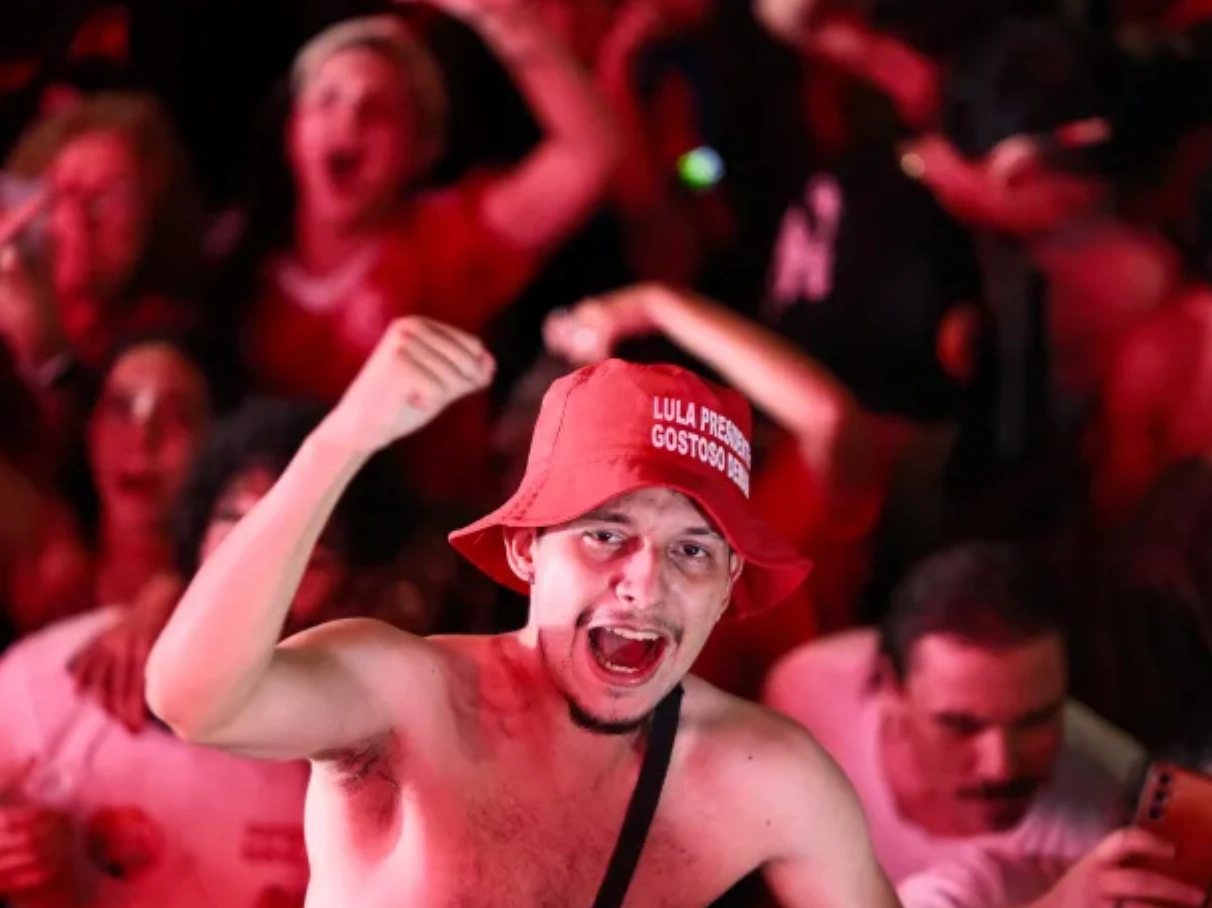
Brazilian President Luiz Inácio Lula da Silva has achieved a remarkable political comeback, winning a historic fourth non-consecutive term after defeating right-wing Senator Flávio Bolsonaro in a closely fought presidential runoff.
Lula secured just over 51% of the vote, while Bolsonaro received roughly 48%, with 98.76% of ballots counted when electoral authorities confirmed Lula’s victory.
The result marks an extraordinary turnaround for the 80-year-old left-wing leader. Lula had finished behind Bolsonaro in the first round on October 4, when Bolsonaro received 47.03% compared with Lula’s 45.16%.
With only three weeks between the two rounds, Lula worked to rebuild support among voters who had stayed home and those concerned about rising living costs and the future of his social welfare programmes.
The race remained extremely close until the final votes were counted. Bolsonaro briefly led during the early stages of the count, but Lula eventually moved ahead as results from Brazil’s northeast came in. The region has traditionally been a stronghold for Lula and his Workers’ Party.
The victory makes Lula the first candidate in modern Brazilian history to lose the first round of a presidential election and then win the runoff. It also gives him an unprecedented fourth presidential term.
At 80, Lula is set to become Brazil’s oldest president to take office since the country returned to democracy.
Dispute over extended voting hours
The election was overshadowed by controversy after voting hours were extended in some locations.
Both campaigns had requested additional time. Lula’s team alleged that public transport disruptions in several cities had made it harder for poorer voters to reach polling stations. Bolsonaro’s campaign cited severe weather and flooding as reasons for extending voting.
Brazilian Supreme Court Justice Cristiano Zanin eventually ordered polling stations that were still operating to remain open for an additional two hours.
However, some polling stations had already closed and switched off their electronic voting machines by the time the decision was announced. This created confusion over which locations could continue accepting voters.
Bolsonaro seized on the controversy after the election, arguing that the circumstances justified challenging the result.
“He changes the rules of the game mid-game,” Bolsonaro said, accusing Zanin of judicial misconduct.
Bolsonaro signals legal challenge
Brazil’s Federal Police are investigating alleged disruptions to election-related transportation in several states.
In Salvador, authorities reportedly ordered the arrest of a municipal transport official over allegations involving reductions in bus services. Lula’s supporters cited such incidents as possible evidence of attempts to interfere with voting.
Bolsonaro, meanwhile, has rejected the election result and suggested that his campaign could take the matter to court.
His position has received support from parts of the international political right, including Donald Trump Jr, who criticised the decision to extend voting hours.
The dispute is likely to intensify existing tensions between Brazil’s conservative movement and the country’s judiciary. Bolsonaro supporters have repeatedly accused Brazil's courts of targeting the former president and his political allies.
Flávio Bolsonaro has also advocated changes to Brazil’s judicial system and constitutional reforms following the legal troubles faced by his father, former President Jair Bolsonaro.
Turnout could have played a decisive role
Voter turnout may have been another important factor behind Lula’s comeback.
More than 33 million Brazilians did not vote in the first round, representing around 21% of the electorate. It was the highest abstention rate in a Brazilian general election since 1998.
Political analysts believe that bringing some of those voters back to the polls could have made a significant difference in such a close race.
Lula also focused heavily on working-class voters during the final weeks of the campaign. Among his last-minute proposals was a pledge to introduce free public transportation on weekends.
The final turnout figures could provide further insight into how Lula overturned the first-round deficit.
Lula victory challenges Trump’s influence in Latin America
Lula’s victory could also complicate US President Donald Trump’s efforts to strengthen relations with right-wing governments and movements across Latin America.
The Bolsonaro family has maintained close ties with Trump and his political movement. Flávio Bolsonaro campaigned on strengthening Brazil-US relations, while Lula made national sovereignty and opposition to foreign interference central themes of his campaign.
Lula has repeatedly criticised Trump’s trade policies and his comments concerning Jair Bolsonaro’s legal troubles, describing them as examples of foreign interference in Brazilian affairs.
Trump avoided publicly endorsing either candidate when asked about the election shortly before the vote, saying only that Washington was watching the situation closely.
Following his victory, Lula directly addressed what he described as outside interference.
He presented the result as a rejection of misinformation and political denialism and thanked his supporters for helping him secure another term.
The election therefore represents more than a personal comeback for Lula. It marks a major political setback for the Bolsonaro family and could reshape Brazil’s relationship with the United States, its approach to the judiciary and its political direction for the years ahead.